Suvarnabhumi Transit Under 3 Hours - What You Need to Know
8 min read
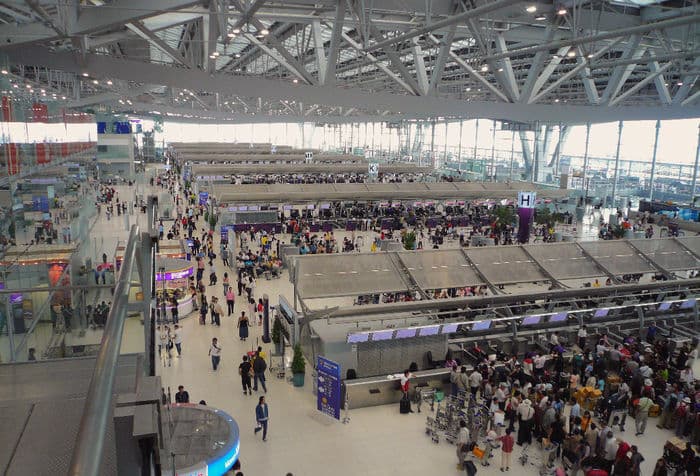
A three-hour layover at Suvarnabhumi (BKK) sounds generous on paper. In practice, many travelers discover that Bangkok is less like a single hallway between gates and more like a sequence of queues you cannot skip if your tickets are not wired together the way you assumed. If you are transiting under three hours, the goal is simple: protect the minutes that actually move you forward, and stop treating the airport like a place where time is free.
This guide is written for the traveler who is not trying to memorize every airline rule, but who does want a realistic mental model of BKK on a tight clock. It focuses on the most common pain points: immigration, baggage, security, and the difference between what feels like a "connection" and what the airport treats as a new departure.
Suvarnabhumi is a major hub for long-haul and regional traffic. That hub energy makes people imagine seamless airside transfers everywhere. In many cases, especially when you are mixing international and domestic travel, or when you purchased tickets that do not through-check baggage, your "layover" is actually a mini arrival followed by a mini departure.
That matters because the slow parts are often not the walk between concourses. The slow parts are:
If you only remember one sentence: a short layover at BKK is often won or lost at immigration and baggage, not at the gate.
Before you stress about minutes, clarify which world you are in.
Protected connections (typically one booking, one ticket stock, bags tagged to final destination when eligible) can still involve security and walking time, but you are usually following signs for transfer or connections and staying inside the airport's designed flow for through passengers. This is the scenario where three hours most often feels boring rather than terrifying, assuming your inbound is on time.
Self-built transfers (two tickets, different PNRs, or itineraries where you must collect bags and check in again) behave like two separate trips that happen to occur on the same calendar day. Here, Suvarnabhumi becomes an arrival airport first. You clear immigration, you wait for bags if applicable, you find your next airline's check-in zone, you pass security again, and only then are you "transiting" in the everyday sense.
If you are in the second world, read everything below as mandatory, not optional.
This is a common tight pattern: you land international at BKK and you need a domestic flight from BKK (not DMK). Even when the domestic terminal is the same airport, you are still doing a full arrival path unless your baggage and boarding pass were handled as a through service.
Think in blocks, not optimistic single numbers:
Add normal human friction: bathroom, water, a confused moment at a sign, a wrong escalator, a payment hiccup for an overweight bag. Five minutes here and there is how an hour vanishes without drama.
Some travelers assume any international to international connection at BKK stays sterile and simple. Sometimes it does. Sometimes it does not, depending on airline alliance, ticketing, whether you must collect bags, and whether you need a boarding pass issued locally.
If you are under three hours, do not guess based on a single Reddit post from 2019. Check:
If you must clear immigration, you are back to the same queue risk as everyone else. That is why frequent flyers talk about Fast Track not as luxury branding, but as variance reduction when minutes matter.
If your outbound flight is from Don Mueang, a three-hour "layover" at Suvarnabhumi is often not mathematically sane unless you have a private driver staged perfectly, no checked bag delay, and a fast immigration experience. The road transfer alone can consume a big slice of your budget, and traffic around Bangkok is not a spreadsheet.
If someone sold you BKK to DMK in under three hours on separate tickets, treat it as a high-risk plan unless you have verified historical on-time performance for your inbound route and you are traveling carry-on only.
These are the classic self-inflicted wounds we see in travel stories about Bangkok connections:
If you are under three hours, treat every optional task as optional later. First you secure your onward path. Then you optimize comfort.
Fast Track is not a magical teleport. It is a way to reduce exposure to the highest-variance step for many arriving passengers: immigration queues, when eligible lanes and service options exist for your situation.
On a tight schedule, the value proposition is not "I want VIP vibes." It is:
If your connection is truly tight, mention both flights and times in your booking notes so the meet window matches reality. Airports punish vague plans.
Be honest with yourself if any of these apply:
In those cases, the better move is not "walk faster." The better move is more layover or a single protected itinerary.
If you are committed to a sub-three-hour connection plan at Suvarnabhumi, do this before you board the first flight:
Suvarnabhumi can be a smooth hub when your tickets, bags, and timelines align. Under three hours, alignment matters more than optimism. Protect the steps you control: know whether you are doing a true airside transfer or a landside re-entry, treat immigration as the main schedule risk for many itineraries, and avoid mixing BKK with DMK unless your layover is sized for real-world Bangkok friction.
Pro tip: if you are even slightly unsure whether your bags are through-checked, ask at the departure desk before your first flight takes off. Mid-air regret is the most expensive kind.
FastTrack BKK uses a machine-learning operations engine to track your flight, terminal, and meet window in real time. Your greeter waits in the right place, queues feel shorter, and arrival at Suvarnabhumi stays calm.
Read moreFlying to Bangkok in November? TAT confirmed the city and both airports stayed open after late-September rain. What November high season means for Suvarnabhumi immigration and Fast Track.
Read more
FastTrack BKK now takes Visa, Mastercard, Apple Pay, Google Pay, Alipay, and EU bank apps in euro, plus PayPal, bank transfer, and crypto. Here is how checkout works for Suvarnabhumi Fast Track.
Read more